Preparing your electric gate for Concord's rain and wind season
Concord gates do not face a cold-weather season. They face a rain and wind season: saturated clay, ponding tracks, ridge winds, and storm outages. Prepare for those.
Gate advice written for cold climates does not fit Concord. Concord's coldest days are few and mild, and this gate does not need protection from deep cold. What it does need, each year before the rains arrive, is preparation for saturated ground, ponding water, strong ridge winds, and storm outages. Those four forces are the main seasonal risks to prepare for in Concord.
Posts, tracks, and drainage before the rain
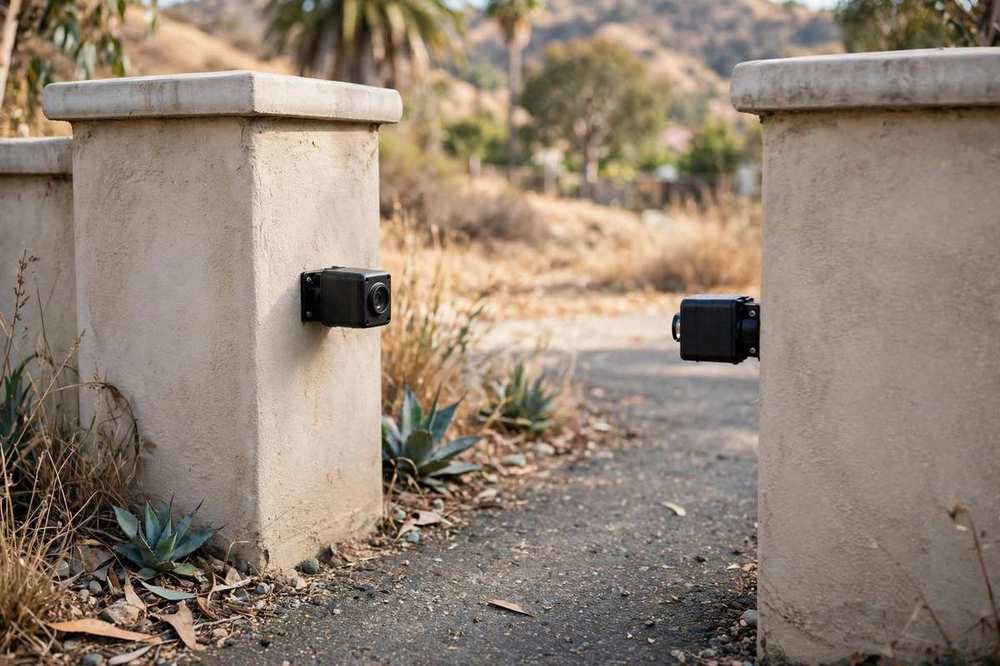
Walk the gate line before the first heavy rain. Check posts for plumb and for softness at grade, because local contractors report expansive clay that swells as it saturates and will tilt a weak post further. Sweep sliding tracks clear and check that water drains away from the low end rather than ponding in it, since ponding rusts tracks and drags rollers. Clear leaves and debris from around sensor housings and operator vents, and trim plants that will grow across the beam path or into the gate's travel once rain starts. If a gate already drags or its latch gap has widened over summer, have the post or hinge put right before rain makes it worse: our gate post repair and gate track repair pages explain that work.
Wind: the hillside problem
Valley wind in Concord is usually light, with a summer Delta breeze, but hillside and ridge lots face a different regime: Diablo winds that can gust strongly during dry wind events, and a large solid gate acts as a sail. Before the windy season, check hinge bolts, latch strength, and opener arm fixings on solid gates, especially on ridge and hillside lots around Lime Ridge, Crystyl Ranch, and Pine Hollow. A gate that rattles in wind is telling you its hinges or latch are loose, and a gate left unlatched in a wind event can slam, bend a hinge, or damage its opener. Keep solid gates latched when not in use, and do not prop a gate open in wind.
Electrics, sensors, and storm outages
Clean sensor lenses, check sensor alignment and housing gaskets, and look for nicked wiring at posts before rain finds it. Test the battery backup by simulating an outage as the manual describes: a backup that has aged out will not carry a gate through a storm outage, and discovering that during an outage is too late. Note where the manual release is and keep its key accessible, as described in our sliding-gate outage guide. After any storm outage, run one supervised full cycle and confirm the safety sensors and reversal work before returning the gate to normal use. See electric gate repair and gate opener repair for post-storm checks, and our Concord service areas for coverage.
Wood gates in the rainy season
Wood gates need their finish intact before rain, not after: seal or stain while the wood is dry, keep the bottom rail out of mulch and standing water, and keep soil from piling against the post base. A finish that has already failed will let rain into the rail and post base all season, and the rot that follows is the most common reason a wood gate is replaced rather than repaired. See wooden gate repair for that work.
If the checks above do not fix it, or if anything looks bent, cracked, or unsafe, stop and call Grand Gate Repair of Concord Company at +1 925-265-8944. We are open 8:00 AM–8:00 PM daily, Monday through Sunday, at 2727 Clayton Rd, Concord, CA 94519. Tell us what the gate is doing and what opener it has, and we will talk through the next step for electric gate rain and wind season preparation in Concord.
Sources and further reading
General references for the local rules, codes, and safety standards mentioned above.