Why your automatic gate won't close all the way in Concord
A gate that stops short or reverses is usually obeying a stop signal. Here are the Concord causes to check first, in order.
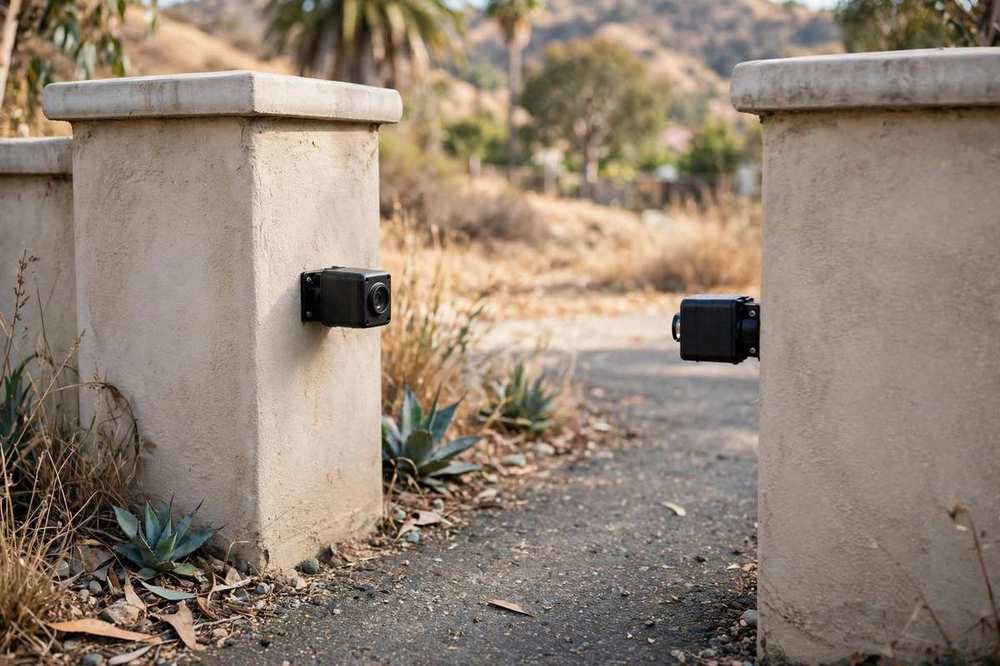
A gate that stops short of the latch, or closes partway and then reverses, is usually not broken in the way it looks. The operator is obeying a stop signal, losing power mid-travel, or pushing against something that will not move. Working through the causes in order saves a lot of guessing, and it keeps you from forcing a gate that should not be forced.
In Concord, the usual suspects are safety sensors, track debris, limit settings, and posts that have moved with the seasons. Concord sits on expansive clay that swells when winter rain saturates it and shrinks as it dries in summer, so a post that was plumb in spring can lean enough by autumn to throw a latch out of line. Add summer heat, which stresses opener electronics and batteries, and hillside lots where a gate drags on a slope, and you have most no-close calls covered.
Start with the safety sensors
Photoelectric safety sensors sit low on each side of the opening. If the beam between them is broken, blocked, or misaligned, most modern operators will refuse to close, or will reverse. That is the protection working as designed, so never tape over a sensor or disconnect it to make the gate close.
Wipe both lenses with a soft, dry cloth. Dust from a dry Concord summer, cobwebs, and rain splash all dim the beam.
Check alignment. The two sensors should face each other squarely. A bump from a bin, a bike, or a mower can knock one a fraction out of line, which is enough.
Look for the indicator light. If one sensor shows no light at all, check its wiring and whether the operator has power before assuming the sensor itself has failed.
Clear the beam path. Overgrown plants, a parked bin, or a hose left across the opening will all stop a close cycle.
Then check the track, rollers, and the gate itself
On a sliding gate, sweep the track clear of grit, leaves, and small stones, and look for a bent or rusted section. A gate that stops at the same spot every time is pointing at that spot. Rollers with flat spots or seized bearings make the gate drag, and the operator reads that drag as an obstruction and reverses. On a swing gate, try the manual release and move the gate by hand: if it binds, sags, or drags on the ground, the problem is mechanical, not electrical. Hinge wear, a leaning post, or a frame that has racked out of square are all common after a season of clay movement. Our gate track repair and swing gate repair pages explain how each of those is put right.
Limits, power, and the control board
Travel limits tell the operator where "closed" is. If they drift after a power surge, a storm, or vibration, the gate can stop inches short while believing it has finished. A short power cycle, done exactly as the operator manual describes, sometimes restores normal travel, but if the gate keeps losing its limits, the board or a limit switch needs attention. Check the breaker and the operator's power light first: a gate that is dead after an outage is a power problem, not a sensor problem. See gate control board repair and gate motor repair for the related checks.
When to stop and call
Stop cycling the gate if you hear grinding, smell burning from the operator housing, see a cracked hinge weld or a post that has clearly shifted, or if the gate has come off its track. Repeated failed cycles wear the motor and board, and a gate off its track can fall. Note where the gate stops, whether it reverses or simply stalls, and whether the sensor lights are on: those three details make diagnosis much faster.
If the checks above do not fix it, or if anything looks bent, cracked, or unsafe, stop and call Grand Gate Repair of Concord Company at +1 925-265-8944. We are open 8:00 AM–8:00 PM daily, Monday through Sunday, at 2727 Clayton Rd, Concord, CA 94519. Tell us what the gate is doing and what opener it has, and we will talk through the next step for automatic gate repair in Concord.
Sources and further reading
General references for the local rules, codes, and safety standards mentioned above.