Gate will not latch
Post movement, hinge wear, frame racking, or a worn latch mechanism.
Gate latch repair in Concord, CA is usually a symptom of something else: a latch misses its strike because the post moved, the hinges wore, or the frame racked — and replacing the latch alone, without correcting the alignment, only moves the problem a few weeks forward. Latch work therefore starts with the gate's squareness, then the latch itself: worn mechanisms, sticking bolts, and strikes that have shifted.
Tell us what the gate is doing and where in Concord you are. We serve Concord, CA — ZIP codes 94518, 94519, 94520, and 94521.
Call Now 925-265-8944 → Monday–Sunday, 8:00 AM–8:00 PM. Quote on inspection.On this page
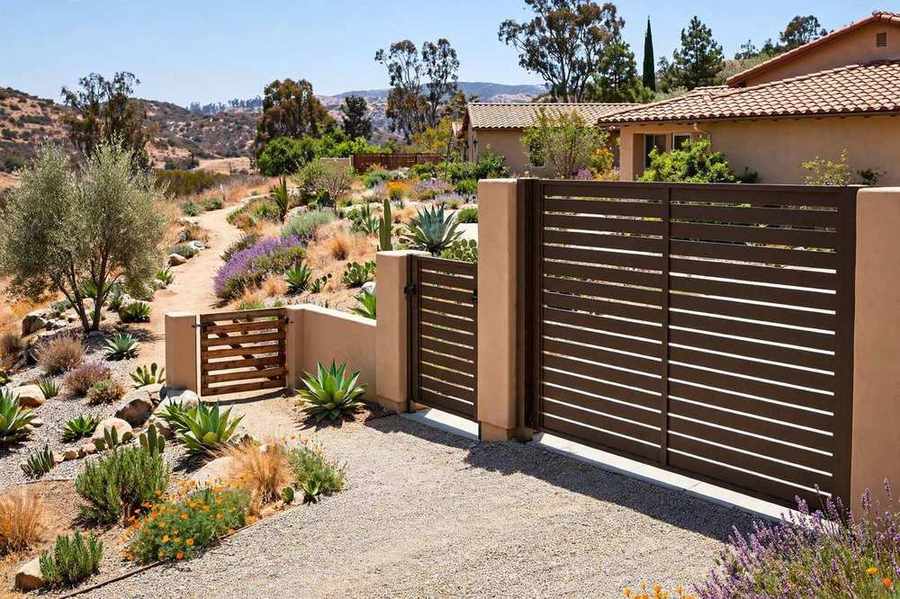
Concord conditions shape these faults. In Concord, gate trouble often starts underground. Local contractors report expansive clay that swells when winter rain soaks it and shrinks as it dries in summer, so posts lean, gates drop out of square, and latches stop lining up. Mature tree roots can heave a post the same way, and on hillside lots near the Diablo foothills a gate that swings uphill drags, binds, and strains its operator. Summer heat warps wood, ages coatings, and stresses opener electronics and batteries, while winter wetness and soil contact drive rust at grade level. A latch that worked in summer and misses after a wet winter is usually showing post movement, and a latch on a high-cycle shared gate wears faster than one on a single-family side gate.
A latch fault is usually a symptom of something else: a latch misses its strike because the post moved, the hinges wore, or the frame racked, and replacing the latch alone, without correcting the alignment, only moves the problem a few weeks forward. In Concord, clay that leans a post moves the strike season by season, summer heat warps wood leaves away from their strikes, and a gate that must close itself — through a closer — adds a second device that must be judged with the latch. Latch work therefore starts with the gate's squareness, and only then with the latch itself.
Most latch jobs include an alignment-first diagnosis and the repair itself: post, hinge, and frame squareness, then the latch mechanism, the strike, and — where fitted — the closer that must shut the gate onto its latch.
Post, hinge, and frame squareness checked before the latch is blamed.
Worn or sticking latches replaced with hardware suited to the gate's weight and use.
Strikes re-aligned so the gate latches without lifting, pushing, or forcing.
Closers checked where the gate must close itself, including pool and shared gates.
Heavier-duty latches recommended where a shared gate cycles many times a day.
Call 925-265-8944 during business hours, Monday through Sunday, 8:00 AM to 8:00 PM, and describe what the latch does: misses its strike, needs the gate lifted or pushed to catch, sticks or jams, will not hold the gate shut, or lets a self-closing gate swing free. Whether the gate must be lifted to latch points to sag, and whether the latch itself sticks points to the mechanism, before anyone travels.
Post, hinge, and frame squareness are checked before the latch is blamed, then the latch mechanism itself — wear, sticking bolts, and spring action — then the strike position, then — where fitted — the closer, to confirm the gate actually shuts itself onto its latch.
Once the fault is found, you get a quote on inspection before work starts. No figures are quoted sight-unseen, because the fix depends on whether the answer is a latch, a strike adjustment, a closer, or the post, hinge, and frame correction underneath it.
The repair is completed and the gate is closed and latched repeatedly without lifting, pushing, or forcing, and — where a closer is fitted — the gate is shown to close and latch itself from its full open position.
You are shown what was done and what to watch for — strike drift after a wet season, closer function, and latch wear — so a returning miss is caught while it is still an adjustment, not a mechanism replacement.
Alignment diagnostic equipment, used so a latch fault, a strike fault, a closer fault, and a post, hinge, or frame fault are told apart before the latch is replaced.
Used on an automated or access-controlled gate to test supply voltage at an electrified latch and the board's reading of it, separating a latch or wiring fault from a mechanical alignment fault; on a purely manual gate this electrical check does not apply.
Used to check post plumb, gate squareness, and the exact gap between latch and strike after repair.
Used for latch, strike, closer, and hardware adjustment and replacement, without stripping fixings.
Winter-saturated clay swells and summer-dry clay shrinks, and on a latched gate that movement leans the post and walks the strike away from the latch across the seasons — the latch is adjusted to a moving target until the post is addressed.
What a technician checks first: the gate's squareness, before the latch is blamed. A latch that misses its strike on a sagging leaf, a leaning post, or a racked frame is reporting the sag, not failing itself, and the repair follows the squareness, not the latch.
Summer heat warps wood leaves and expands metal, moving latches away from their strikes, while winter wetness and soil contact rust latch mechanisms and strikes at grade level — a latch misses in summer for a different reason than it sticks in winter.
Repaired versus replaced depends on the alignment: a worn or sticking latch is replaced with hardware suited to the gate's weight and use, a shifted strike is re-aligned, and a latch that keeps failing because the gate is out of square points toward post, hinge, or frame correction, not another latch.
Hillside lots near the Diablo foothills make swing leaves drag and sag toward their strikes unevenly, and gates used many times a day wear latches and closers fastest — slope moves the strike, and cycle count wears the mechanism.
A common misdiagnosis to avoid: replacing the latch alone, without correcting the alignment, only moves the problem a few weeks forward — the new latch will miss the same strike as soon as the sag returns.
Safety note for automated gates: current UL 325 practice calls for two independent means of entrapment protection for each entrapment zone, in each direction of travel, and the two means must be of different types — for example inherent force sensing plus photo eyes or a safety edge. If a monitored sensor faults or is disconnected, the operator should not run. Safety sensors must never be taped over, bypassed, or disconnected to force a gate closed, and controls should sit where a person using them cannot contact the moving gate.
Call 925-265-8944 →Post movement, hinge wear, frame racking, or a worn latch mechanism.
Worn mechanism, corrosion, or a strike that has shifted.
Sag from hinges, post, or frame — the latch is the symptom, not the cause.
Worn latch or strike, or a closer that no longer pulls the gate shut.
No licence number, warranty terms, or firm prices are published on this site, because none have been verified for this business. What you get is an on-site inspection, a quote on inspection, and a safety test after the repair. Hours: Monday–Sunday, 8:00 AM–8:00 PM. Address: 2727 Clayton Rd, Concord, CA 94519, United States. See what customers say on Yelp and Google Maps.
Describe what your gate is doing and where in Concord you are, and we will arrange a visit during business hours. Call 925-265-8944, Monday through Sunday, 8:00 AM to 8:00 PM. You can also read customer comments on Yelp and Google Maps — no review quotes are published here.
Usually the gate has gone out of square: a post moved by expansive clay, worn hinges, or a racked frame shifts the latch away from its strike. Alignment is corrected first, then the latch itself is assessed.
A gate that will not latch is a security and containment problem — pets and children included — so it is worth a prompt call during business hours at 925-265-8944.
Every job starts with an on-site inspection and a quote on inspection — no figures are quoted sight-unseen, because the right fix depends on the gate, the post footings, and the operator. Call 925-265-8944 during business hours, Monday through Sunday, 8:00 AM to 8:00 PM, to arrange a visit.
Safety note for automated gates: current UL 325 practice calls for two independent means of entrapment protection for each entrapment zone, in each direction of travel, and the two means must be of different types — for example inherent force sensing plus photo eyes or a safety edge. If a monitored sensor faults or is disconnected, the operator should not run. Safety sensors must never be taped over, bypassed, or disconnected to force a gate closed, and controls should sit where a person using them cannot contact the moving gate.
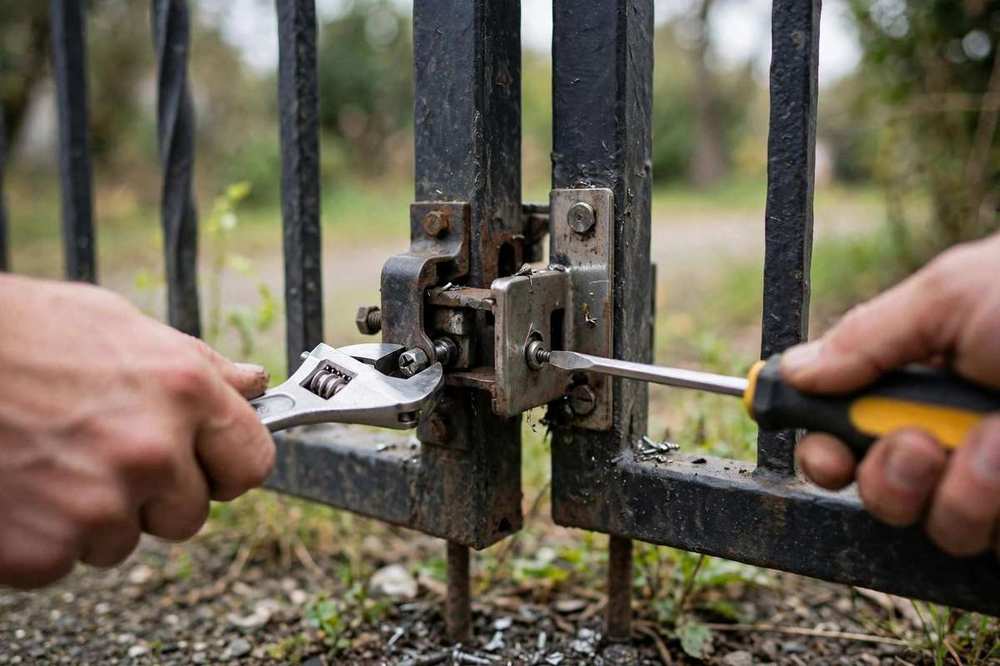 Gate Lock RepairGate lock repair in Concord, CA covers the locking side of a gate: keyed locks, padlock hardware, magnetic latches, and the lock hardware on keypad and access-controlled gates. A lock that jams, turns without engaging, oExplore →
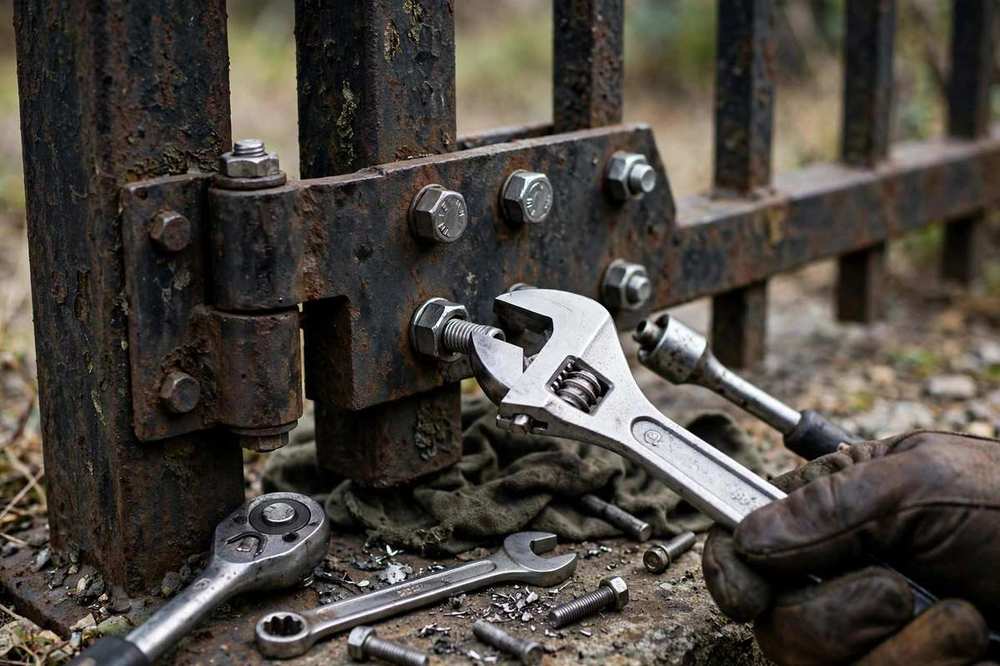 Gate Hinge RepairGate hinge repair in Concord, CA is small hardware with outsized consequences: a worn, bent, or elongated hinge drops a leaf, makes it drag, and throws the latch out of line, while a hinge plate pulling loose under a heaExplore →
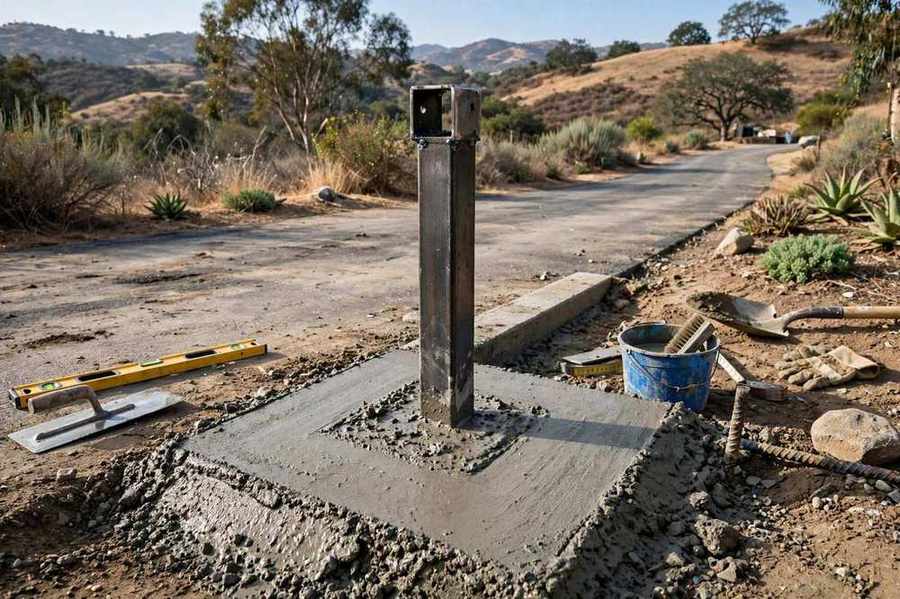 Gate Post RepairGate post repair in Concord, CA is the headline structural job, not an afterthought: a gate is only as square as its posts, and most sagging, dragging, and non-latching gates trace back to a post. The work covers post plExplore →
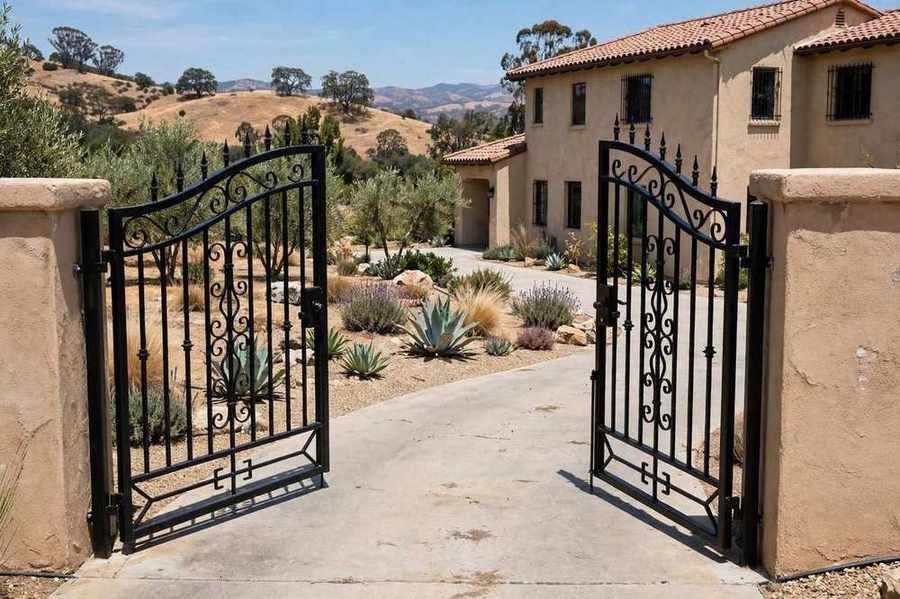 Swing Gate RepairSwing gate repair in Concord, CA covers single and double-leaf gates, including linear ram, articulated arm, and underground operators where fitted. The recurring work is sagging and dragging leaves, worn or bent hinges,Explore →
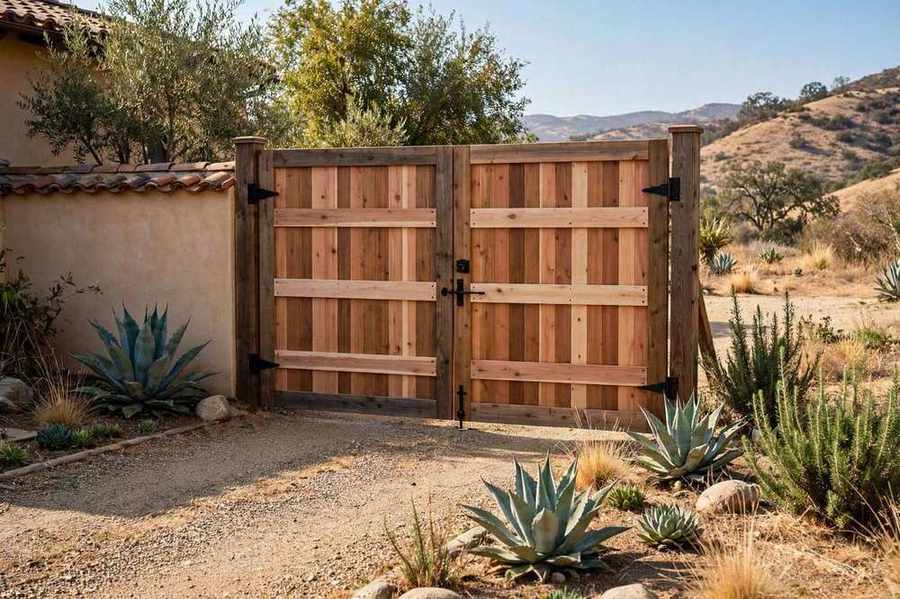 Wooden Gate RepairWooden gate repair in Concord, CA is the most common residential gate work in the city, because so much of Concord's housing dates from the post-war decades and its gates are wood. Cedar and redwood resist rot and insectExplore →
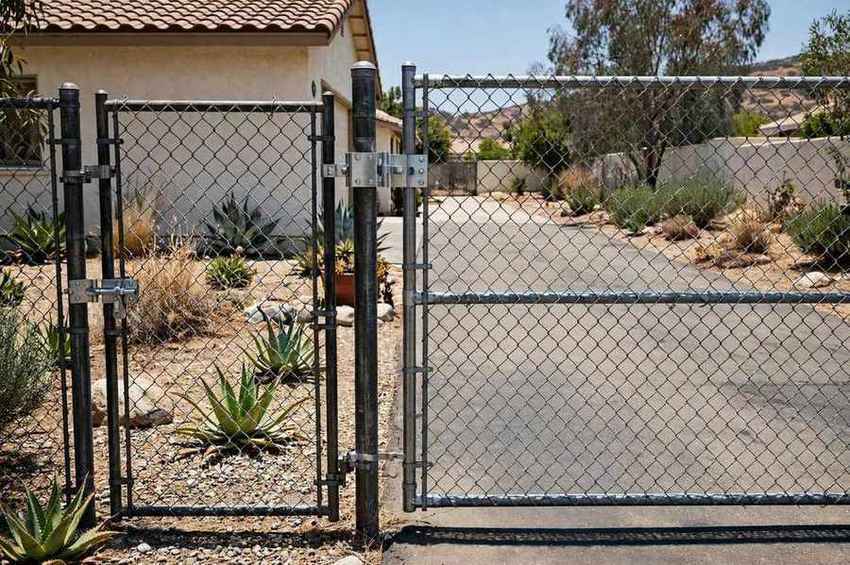 Chain Link Gate RepairChain link gate repair in Concord, CA covers a cost-effective, low-maintenance gate type that trades privacy for see-through security and airflow. The recurring work is bent frames, worn hinges and latches, sagging postsExplore →
Call Grand Gate Repair of Concord Company at 925-265-8944, Monday through Sunday, 8:00 AM to 8:00 PM, for gate latch repair in Concord, CA. You will get an on-site inspection and a quote on inspection.
Call Now 925-265-8944 →Call us at 925-265-8944 during business hours to arrange a visit. Tell us the gate type and what it is doing, and we will come prepared to diagnose it. See our Concord service area and our contact page for full details.