Frame rusted through at rails
Structural failure; the gate is replaced, not patched.
Gate replacement in Concord, CA is the honest answer when repair stops making sense: a frame rusted through at the rails, posts rotted through at grade, a frame racked beyond re-squaring, or an operator that is old, undersized, or has discontinued parts with repeat repairs accumulating. The steel frame of a gate typically outlasts several generations of electronics, so most 'dead' gates are one failed component — replacement is recommended only when the structure or the operator has genuinely reached its end.
Tell us what the gate is doing and where in Concord you are. We serve Concord, CA — ZIP codes 94518, 94519, 94520, and 94521.
Call Now 925-265-8944 → Monday–Sunday, 8:00 AM–8:00 PM. Quote on inspection.On this page
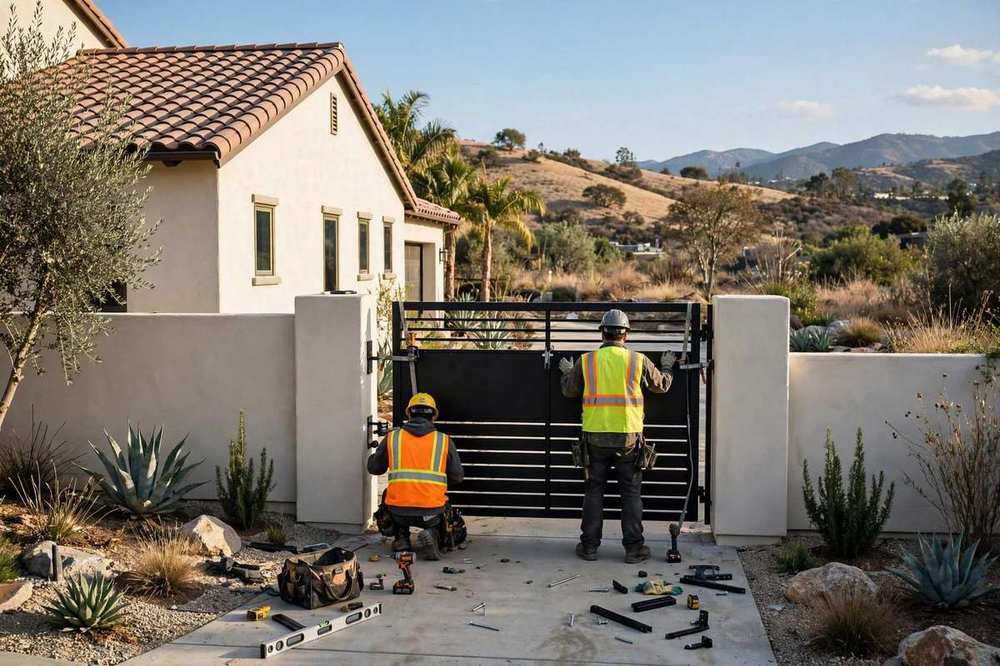
Concord conditions shape these decisions. In Concord, gate trouble often starts underground. Local contractors report expansive clay that swells when winter rain soaks it and shrinks as it dries in summer, so posts lean, gates drop out of square, and latches stop lining up. Mature tree roots can heave a post the same way, and on hillside lots near the Diablo foothills a gate that swings uphill drags, binds, and strains its operator. Summer heat warps wood, ages coatings, and stresses opener electronics and batteries, while winter wetness and soil contact drive rust at grade level. A gate replaced onto the same moving posts, without footing work, will fail the same way — so replacement includes the posts and footings, not just the leaf.
Gate replacement is the honest answer when repair stops making sense: a frame rusted through at the rails, posts rotted through at grade, a frame racked beyond re-squaring, or an operator that is old, undersized, or has discontinued parts with repeat repairs accumulating. The steel frame of a gate typically outlasts several generations of electronics, so most gates described as dead are one failed component — a seized roller, a cracked hinge weld, a failed limit switch — and replacement is recommended only when the structure or the operator has genuinely reached its end.
Most replacement jobs include an honest triage and the work itself: frame, posts, and operator assessed together, repair recommended first where one failed component is the fault, and leaf, posts and footings, and operator replaced as a system where they have genuinely failed.
Frame, posts, and operator assessed honestly; repair is recommended first where one failed component is the fault.
Leaf, and posts and footings where they have failed, replaced as a system.
Old, undersized, or obsolete operators replaced with units sized to the new gate's weight, length, and cycle count.
Wood, steel, iron, aluminum, vinyl, or chain link selected for the site's slope, exposure, and use — not by catalogue alone.
Safety devices fitted and tested on any replacement automated gate, with pedestrians directed to a separate entrance.
Call 925-265-8944 during business hours, Monday through Sunday, 8:00 AM to 8:00 PM, and describe the gate's history, not just its symptom: how old the operator is, how often it has been repaired, whether parts are still available, and whether the frame or posts have rusted or rotted through. That history separates a one-component repair from a genuine replacement before anyone travels.
Frame, posts, and operator are assessed together first — frame rust and racking, post plumb and footing condition, operator age, sizing, and parts availability — then the site itself: slope, width, clearance, and power, since a replacement gate is re-chosen for its site, not copied from the gate it replaces.
Once the assessment is done, you get a quote on inspection before work starts. No figures are quoted sight-unseen, because the fix depends on whether the answer is a leaf, a leaf with posts and footings, an operator, or the whole system — and on the material chosen for the site's slope, exposure, and use.
The replacement is completed and the new gate is cycled through full travel in both directions, with reversing and entrapment-protection functions tested on any replacement automated gate, travel limits set, and pedestrians directed to a separate entrance.
You are shown what was done and what to watch for — coating condition on the new gate, sensor alignment, the manual release, and post movement as the ground goes through its first wet and dry cycle — so a new gate's first season is watched, not assumed.
Replacement-assessment equipment, used so a repairable component, a failed frame, a failed post, and an obsolete operator are told apart before replacement is recommended.
Used to test the existing operator's and sensors' circuits before any reuse decision, separating a reusable device from a failed one, and to verify the new operator's supply and sensor signals once installed.
Used to check existing post plumb, new post positions, swing clearance, slide-path straightness, and latch alignment during replacement.
Used for removal of the old gate, post and footing work, fitting of the new gate, and operator mounting, without stripping fixings.
Winter-saturated clay swells and summer-dry clay shrinks, so posts lean, gates drop out of square, and latches stop lining up across the seasons — which is why a replacement leaf is not hung on old moving posts, since the new gate would inherit the old gate's fault.
What a technician checks first: the triage — frame, posts, and operator, separately. Most gates described as dead are one failed component, and the steel frame typically outlasts several generations of electronics, so replacement is recommended only when the triage shows the structure or the operator has genuinely reached its end.
Summer heat warps wood, ages coatings, and stresses opener electronics and batteries, while winter wetness and soil contact drive rust at grade level — which is why a replacement gate's material and coating are chosen by exposure, with sun-facing and grade-contact areas in mind from the start.
Repaired versus replaced, plainly: repair where one failed component is the fault and the frame, posts, and operator are otherwise sound; replace the leaf where the frame is rusted through at the rails or racked beyond re-squaring; replace posts and footings where they have failed; and replace the operator where it is old, undersized, built from discontinued parts, or lacking modern entrapment protection.
Hillside lots near the Diablo foothills are where a replacement gate is most often re-typed — a swing leaf that dragged uphill becomes a sliding leaf — and gates used many times a day need a heavier-duty replacement operator, since cycle count, not just leaf weight, sizes the new unit.
A note on material choice for the replacement: wood, steel, iron, aluminum, vinyl, or chain link is selected for the site's slope, exposure, and use, not by catalogue alone — a replacement that repeats the old gate's mismatch with its site repeats its failure.
Safety note for automated gates: current UL 325 practice calls for two independent means of entrapment protection for each entrapment zone, in each direction of travel, and the two means must be of different types — for example inherent force sensing plus photo eyes or a safety edge. If a monitored sensor faults or is disconnected, the operator should not run. Safety sensors must never be taped over, bypassed, or disconnected to force a gate closed, and controls should sit where a person using them cannot contact the moving gate.
Call 925-265-8944 →Structural failure; the gate is replaced, not patched.
Post replacement with footing work, since a new leaf on a failed post will not hold.
Operator replacement where parts are discontinued or repeat repairs accumulate.
Frame replacement where re-squaring and reinforcement cannot restore the leaf.
No licence number, warranty terms, or firm prices are published on this site, because none have been verified for this business. What you get is an on-site inspection, a quote on inspection, and a safety test after the repair. Hours: Monday–Sunday, 8:00 AM–8:00 PM. Address: 2727 Clayton Rd, Concord, CA 94519, United States. See what customers say on Yelp and Google Maps.
Describe what your gate is doing and where in Concord you are, and we will arrange a visit during business hours. Call 925-265-8944, Monday through Sunday, 8:00 AM to 8:00 PM. You can also read customer comments on Yelp and Google Maps — no review quotes are published here.
When the frame is rusted through at the rails, posts are rotted through, the frame is racked beyond re-squaring, or the operator is old, undersized, or has discontinued parts with repeat repairs accumulating. Most 'dead' gates are one failed component and are repaired, not replaced.
Where posts or footings have failed, yes — a new leaf on moving posts will fail the same way. Posts and footings are assessed as part of any replacement.
Every job starts with an on-site inspection and a quote on inspection — no figures are quoted sight-unseen, because the right fix depends on the gate, the post footings, and the operator. Call 925-265-8944 during business hours, Monday through Sunday, 8:00 AM to 8:00 PM, to arrange a visit.
Safety note for automated gates: current UL 325 practice calls for two independent means of entrapment protection for each entrapment zone, in each direction of travel, and the two means must be of different types — for example inherent force sensing plus photo eyes or a safety edge. If a monitored sensor faults or is disconnected, the operator should not run. Safety sensors must never be taped over, bypassed, or disconnected to force a gate closed, and controls should sit where a person using them cannot contact the moving gate.
Gate InstallationGate installation in Concord, CA starts with the site, not the catalogue: driveway slope, width, and swing clearance decide swing against sliding; gate weight, length, and expected daily cycles size the operator; and posExplore →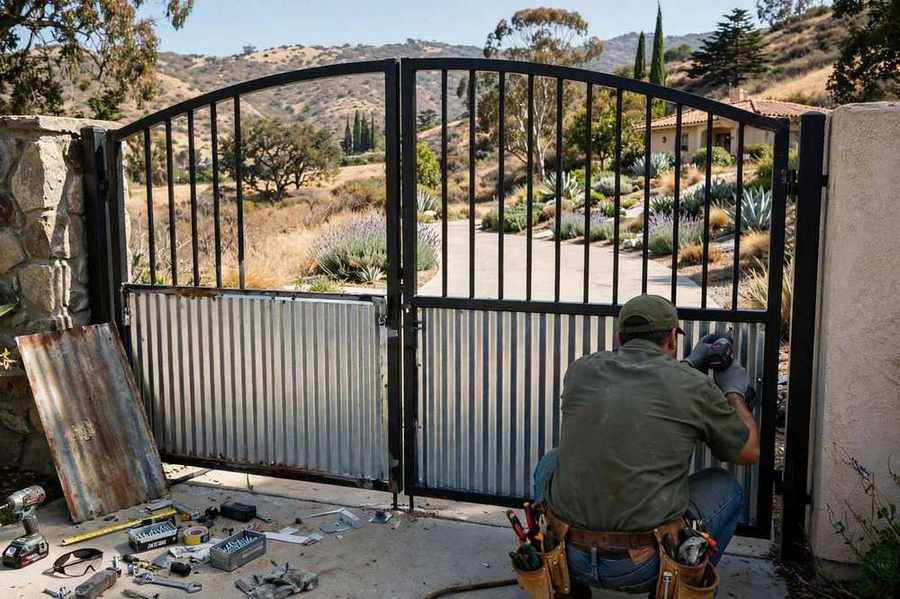 Gate Panel RepairGate panel repair in Concord, CA covers the leaf itself: damaged wood panels and pickets, bent metal sections, cracked vinyl panels, and frames that have racked out of square. Panel work is judged against replacement: a Explore →
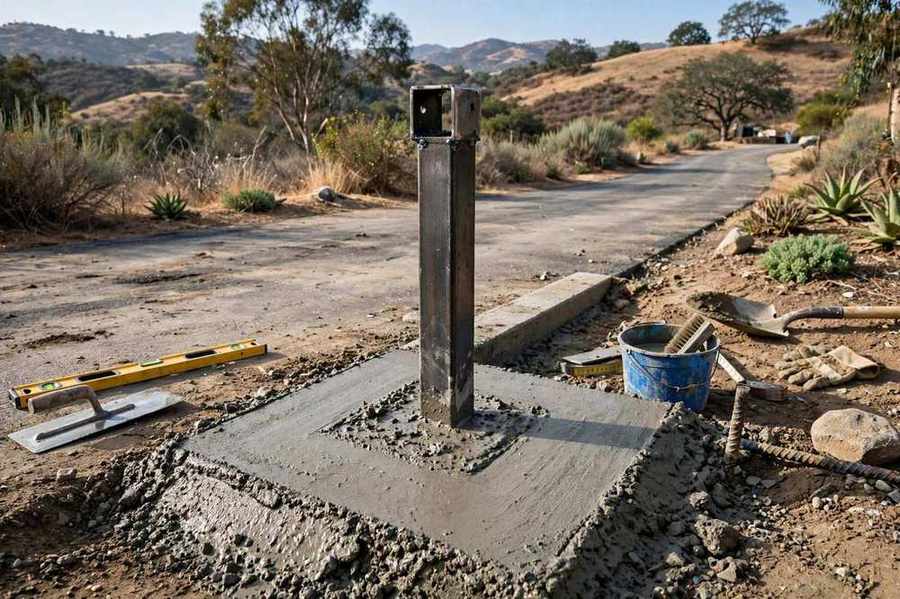 Gate Post RepairGate post repair in Concord, CA is the headline structural job, not an afterthought: a gate is only as square as its posts, and most sagging, dragging, and non-latching gates trace back to a post. The work covers post plExplore →
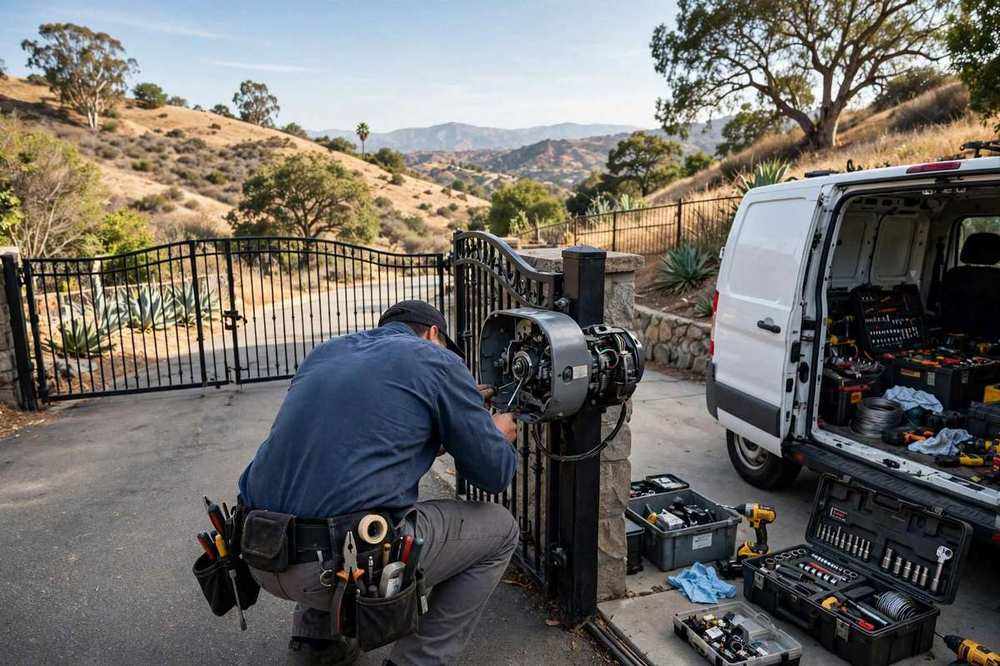 Automatic Gate RepairAutomatic gate repair in Concord, CA covers the whole system — operator, control board, safety circuit, and the gate itself — because a gate that will not move is rarely one failed part in isolation. A motor that hums buExplore →
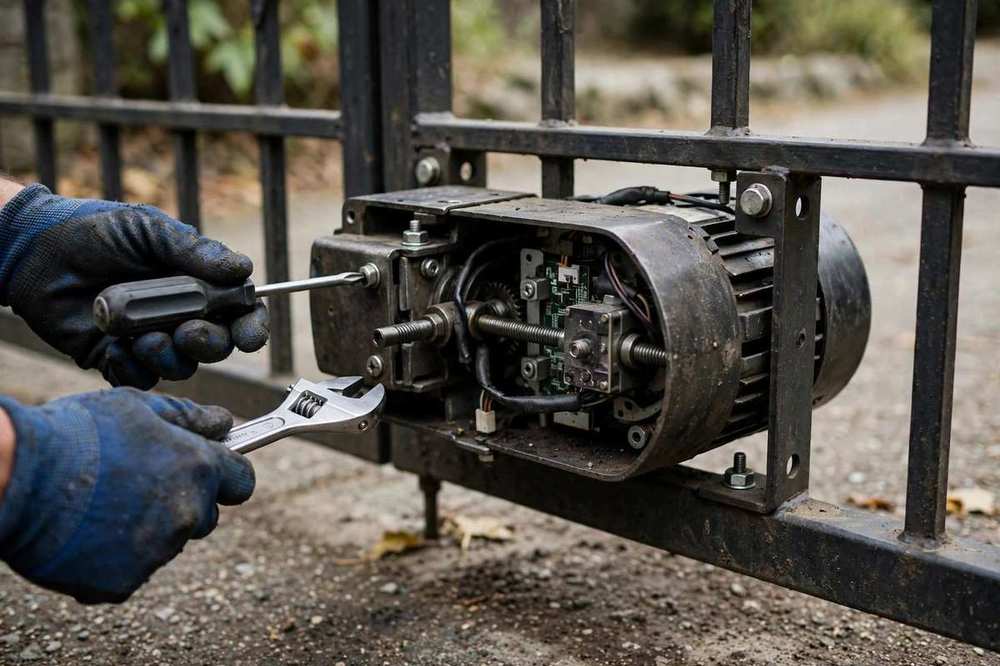 Gate Motor RepairGate motor repair in Concord, CA separates a motor fault from everything around it: a motor that hums, stalls, or runs weakly may have a failed capacitor or gearbox, or it may be a sound motor fighting a bound gate, a moExplore →
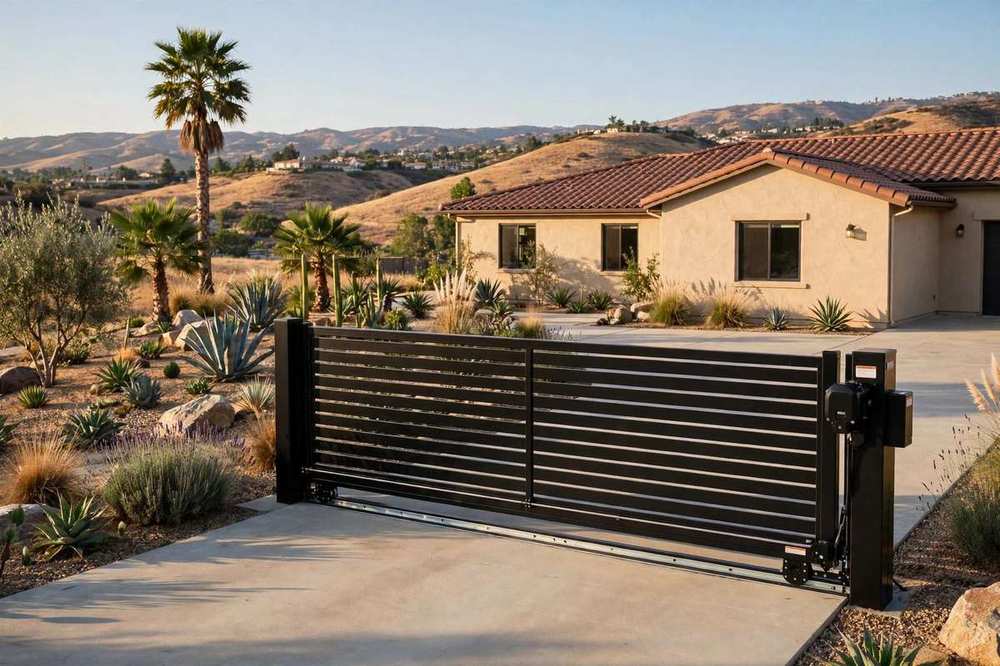 Driveway Gate RepairDriveway gate repair in Concord, CA is mostly repair of the gates Concord already has: post-war homes with older wood and metal gates, newer tract homes with automated gates, and shared entrances that cycle many times a Explore →
Call Grand Gate Repair of Concord Company at 925-265-8944, Monday through Sunday, 8:00 AM to 8:00 PM, for gate replacement in Concord, CA. You will get an on-site inspection and a quote on inspection.
Call Now 925-265-8944 →Call us at 925-265-8944 during business hours to arrange a visit. Tell us the gate type and what it is doing, and we will come prepared to diagnose it. See our Concord service area and our contact page for full details.